Insight

AQIL Digital
AQIL Digital Editorial
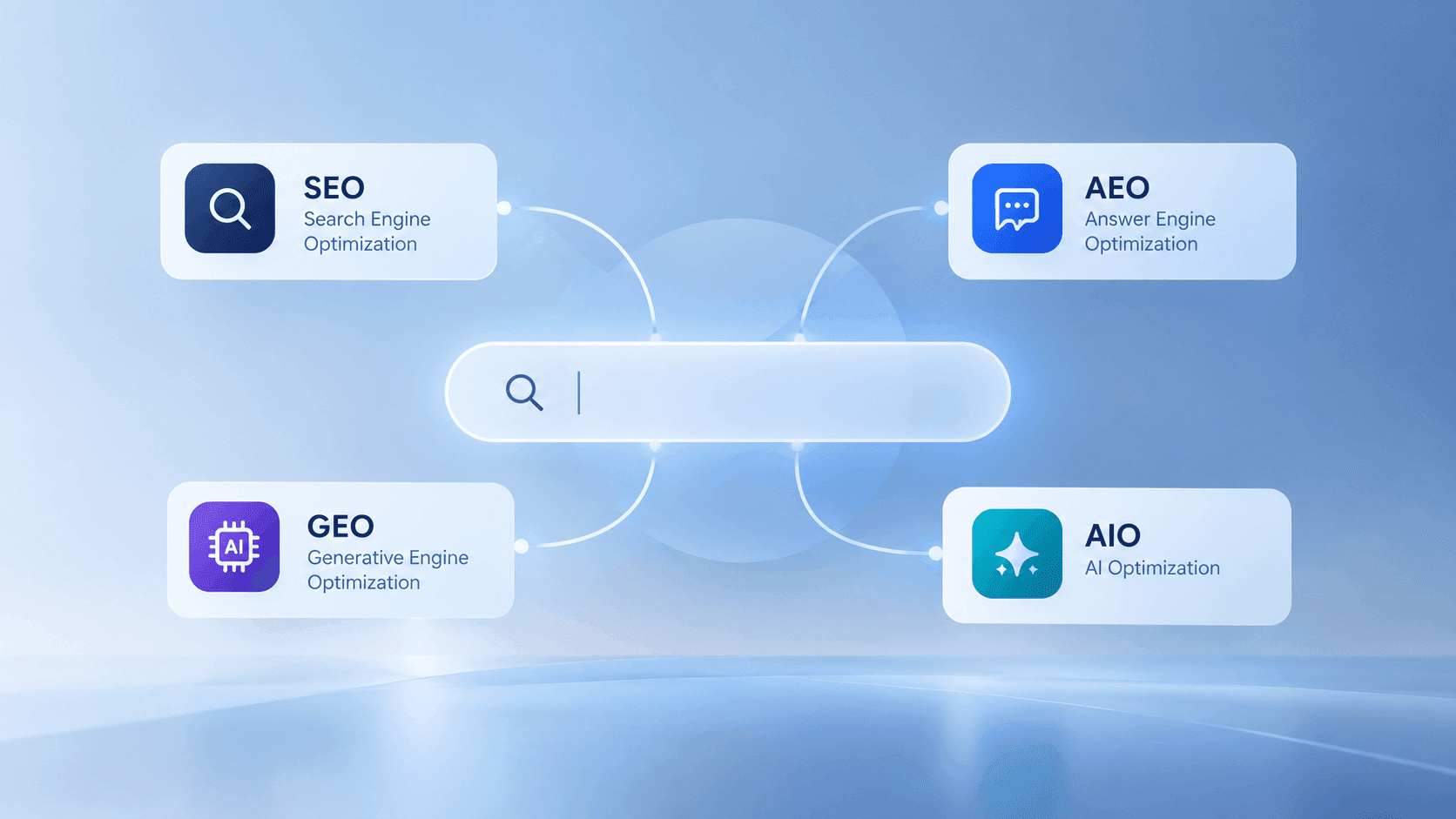
Search is evolving beyond traditional rankings. Discover how SEO, Answer Engine Optimisation (AEO), Generative Engine Optimisation (GEO), and AI-driven discovery are changing how businesses build visibility, establish authority, and reach potential customers.
Audio summary
Listen to this article
Search is evolving. For years, businesses have focused on improving their visibility in traditional search engines, competing for rankings, clicks and organic traffic. Today, the way people discover information, research services and evaluate businesses is expanding beyond conventional search results.
AI-powered experiences are changing how information is presented and how people find relevant websites. From Google's AI Overviews to conversational search experiences such as ChatGPT, people can increasingly explore questions, compare options and discover businesses through AI-assisted interfaces.
For businesses, this introduces an important consideration: having a website is no longer enough. Your digital presence needs to communicate clearly, provide useful information and remain accessible across the evolving search landscape.
Four concepts are increasingly part of this conversation: Search Engine Optimization (SEO), Answer Engine Optimization (AEO), Generative Engine Optimization (GEO) and AI Optimization (AIO).
Although these terms overlap, understanding their differences can help businesses develop a more informed approach to digital visibility.
Search Engine Optimization (SEO) is the process of improving a website's visibility in organic search engine results.
When someone searches for a product, service or answer, search engines evaluate numerous signals to determine which pages are relevant and useful.
A strong SEO foundation typically includes:
SEO remains essential even as search interfaces become more sophisticated.
Google confirms that its AI-powered search experiences continue to rely on foundational SEO principles. Websites still need to meet the relevant technical requirements and provide helpful, reliable content.
The important takeaway is that SEO is not becoming irrelevant. Its foundations are becoming increasingly important across different discovery experiences.
Answer Engine Optimization (AEO) focuses on making information easier for answer-oriented search experiences to understand and surface.
Traditional search often presents users with a list of websites to explore. Answer-oriented experiences attempt to address a question more directly, sometimes combining information from multiple sources.
Consider a potential customer asking:
"What should a small business look for when choosing a web development agency?"
A business that publishes a clear, informative article addressing this question provides useful information that can potentially be surfaced by search engines and AI-powered answer experiences.
AEO-friendly content should prioritize:
For example, rather than publishing a vague heading such as "Our Approach", a business could use:
"What Should You Consider Before Investing in a Business Website?"
The second heading communicates the subject more clearly and establishes an identifiable question.
However, there is no guaranteed format that makes a page appear in an AI-generated answer. The objective is to make useful information accessible, understandable and valuable to readers.
Generative Engine Optimization (GEO) refers to improving how a business's information and content can be discovered, understood and potentially referenced by generative AI experiences.
Unlike traditional search results, generative search experiences can synthesize information from multiple sources to produce a contextual response.
For businesses, this creates another consideration: how clearly does your website communicate what your organization does, who it serves and what expertise it offers?
Consider a company offering commercial website development.
Its website should clearly explain:
This information provides meaningful context for both visitors and automated systems attempting to understand the business.
Practical considerations for GEO include:
Publish original and useful information. Avoid simply repeating information that already exists across hundreds of websites. Offer practical explanations, relevant examples and insights that demonstrate genuine understanding.
Establish clear business identity. Ensure your business name, services, contact information and organisational details are consistent across your website and relevant business profiles.
Build topical depth. Rather than publishing disconnected articles, develop related content that explores important subjects from different perspectives.
Make information accessible. Ensure important information is available as readable website content and is not unnecessarily hidden behind inaccessible interface elements.
Support claims with credible information. Use relevant sources, evidence and examples to support factual statements.
GEO should be approached as an extension of good content and technical practices, not as a collection of shortcuts designed to manipulate AI systems.
AI Optimization (AIO) is a broader and less standardized term. Depending on the context, it can refer to adapting digital content, websites, business information and digital experiences for AI-powered systems.
Unlike SEO, AEO and GEO, AIO does not have one universally accepted definition within the search industry.
For the purposes of digital discovery, it is useful to think of AIO as an overarching approach to making a business's digital presence understandable, accessible and useful in an increasingly AI-assisted environment.
This can involve:
For example, a business might have an excellent website visually but provide very little written information about its services.
Although visitors may understand the website through its visual presentation, automated systems may have difficulty identifying the organisation's actual capabilities.
Clear descriptions, descriptive page titles, accessible text and well-organised content help address this problem.
AIO is therefore best understood as a broader digital readiness concept rather than a guaranteed ranking strategy.
These concepts should not be treated as four completely independent marketing strategies.
They overlap and support a common objective: making useful business information discoverable and understandable.
Consider how they contribute to a single business website:
SEO establishes the foundation. The website needs to be technically accessible, well-structured, relevant and useful.
AEO improves answer clarity. The content should address real questions with direct, informative explanations.
GEO considers generative discovery. The website should communicate its expertise, services and information clearly enough to be understood and potentially referenced by generative systems.
AIO provides a broader perspective. The overall digital presence should be prepared for an environment where AI increasingly assists with information discovery and interpretation.
A business does not necessarily need four separate strategies, four different content systems or four different versions of its website.
A well-developed digital foundation can support all four areas.
The shift toward AI-assisted discovery does not mean businesses need to abandon their existing digital strategies.
Instead, it is an opportunity to strengthen the foundations of their online presence.
Here are seven practical areas worth reviewing.
Organise your website around clear services, products and information.
Visitors should be able to understand what your business does without navigating through multiple confusing pages.
Use descriptive headings, logical navigation and meaningful internal links.
Create articles, guides and resources that address genuine customer questions.
Prioritise accuracy, depth and practical value rather than publishing large volumes of repetitive content.
Review your website's indexing, crawlability, mobile responsiveness, page performance and metadata.
Ensure important content can be discovered by search engines and is accessible in a readable format.
Structured data can help search engines understand information about your organisation, services, products and content.
Implement relevant Schema.org markup where appropriate, and ensure it accurately reflects the information visible to visitors.
Structured data is not a guarantee of AI citations or enhanced search visibility.
Keep your business name, contact details, services and other important information accurate across your website and relevant online profiles.
A clear and consistent digital identity helps people and automated systems understand your organisation.
Some AI platforms use dedicated crawlers to discover public website content.
For example, OpenAI uses OAI-SearchBot to discover content for ChatGPT search experiences.
Website owners should review their robots.txt configuration and hosting restrictions to understand whether relevant crawlers can access their public pages.
Crawler access does not guarantee that content will be included in an AI response.
Traditional search rankings remain useful, but businesses should also consider:
The ultimate objective is not simply to appear in more places. It is to reach the right audience and generate meaningful business opportunities.
As interest in AI-powered discovery grows, so does the number of exaggerated marketing claims.
Businesses should approach this area with realistic expectations.
Myth 1: Traditional SEO is dead. Reality: SEO remains a foundational part of search visibility, including Google's AI-powered search experiences.
Myth 2: Adding special AI files guarantees visibility. Reality: There is no universal AI configuration file or special markup that guarantees inclusion in generative search results.
Myth 3: Publishing more AI-generated articles automatically improves visibility. Reality: Content quality, originality, usefulness and credibility matter. Publishing large volumes of repetitive material is not a substitute for expertise.
Myth 4: Businesses can guarantee placement in ChatGPT or other AI responses. Reality: AI-generated responses depend on the systems, available information and context of individual queries. No agency can legitimately guarantee a particular citation or placement.
Myth 5: AEO and GEO replace SEO. Reality: These concepts overlap with established practices. Strong technical foundations, accessible content and useful information remain important.
The way people interact with information will continue to evolve.
Traditional search engines, conversational AI, generative search experiences and other digital discovery tools will increasingly coexist.
For businesses, the opportunity is not to chase every new acronym or emerging optimisation technique.
It is to build a digital presence that is clear, credible, technically sound and genuinely useful.
A well-developed website should communicate its purpose to visitors, provide meaningful information to search engines and remain accessible to the technologies people increasingly use to discover businesses.
Companies that invest in these fundamentals will be better positioned to adapt as digital discovery continues to change.
SEO, AEO, GEO and AIO represent different perspectives on an evolving digital landscape, but they share an important principle: visibility begins with a strong digital foundation.
Your website should do more than exist online. It should clearly communicate your expertise, answer meaningful questions, establish credibility and make it easy for potential customers to understand the value of your business.
At AQIL Digital, we believe effective digital experiences begin with understanding the people and businesses they are built for.
Whether you are developing a new website, improving an existing platform or reviewing your digital visibility strategy, investing in clarity, performance and useful content is a practical place to start.
Build a digital presence that is ready for how people discover businesses today — and how they may discover them tomorrow.
Yes. Technical SEO, helpful content, accessibility and website structure remain important foundations for traditional and AI-powered search experiences.
AEO focuses on making content useful and understandable for answer-oriented experiences. GEO focuses more broadly on how information may be discovered and referenced by generative AI systems. Their practices overlap.
No. Traditional search and AI-assisted discovery currently coexist. Businesses should build a digital strategy that accounts for both.
There is no universal requirement to have an llms.txt file to appear in Google's AI search features. Google advises focusing on established SEO fundamentals rather than relying on special AI files.
No. Businesses can improve accessibility, content quality and discoverability, but no legitimate optimisation strategy guarantees a particular AI-generated recommendation or citation.
Start with your website's technical health, clear service descriptions, useful original content, consistent business information and a straightforward user experience.
For a practical technical companion to this article, see our guide to llms.txt, AI Crawlers and Preparing Your Website for AI Discovery.
Want a website built for AI-driven discovery?
We help businesses build structured, well-performing digital presences that communicate clearly to both visitors and AI systems.
Explore digital strategyNext insight
Learn why website traffic does not always translate into business opportunities, and discover practical ways to improve messaging, user journeys, trust, and calls to action.
Read next insight →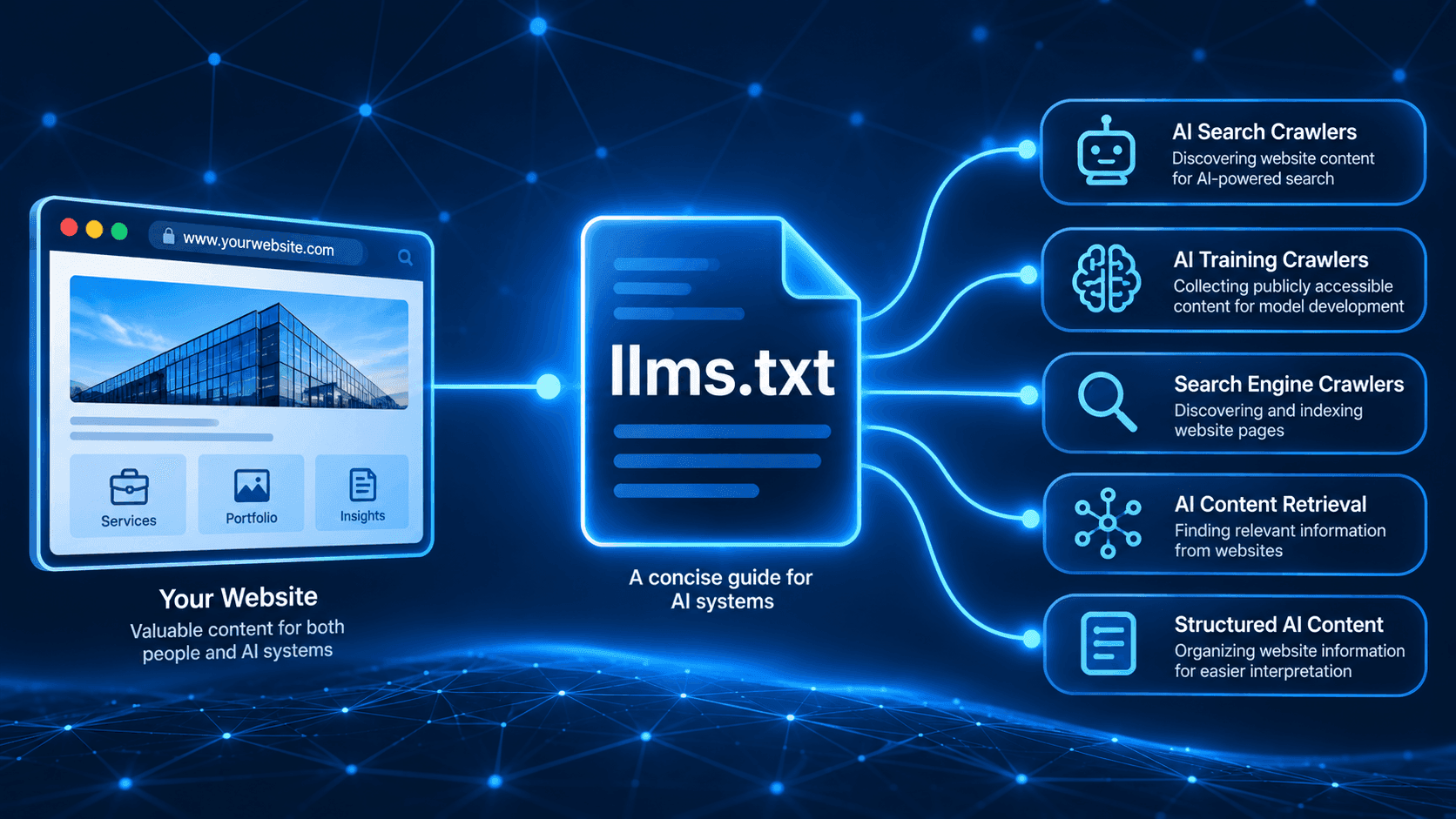
As AI-powered assistants change how people discover businesses, website owners are exploring ways to make their content easier for artificial intelligence systems to access and understand. Discover how llms.txt, llms-full.txt, AI crawlers and emerging AI.txt proposals fit into the evolving landscape of AI-driven website discovery.
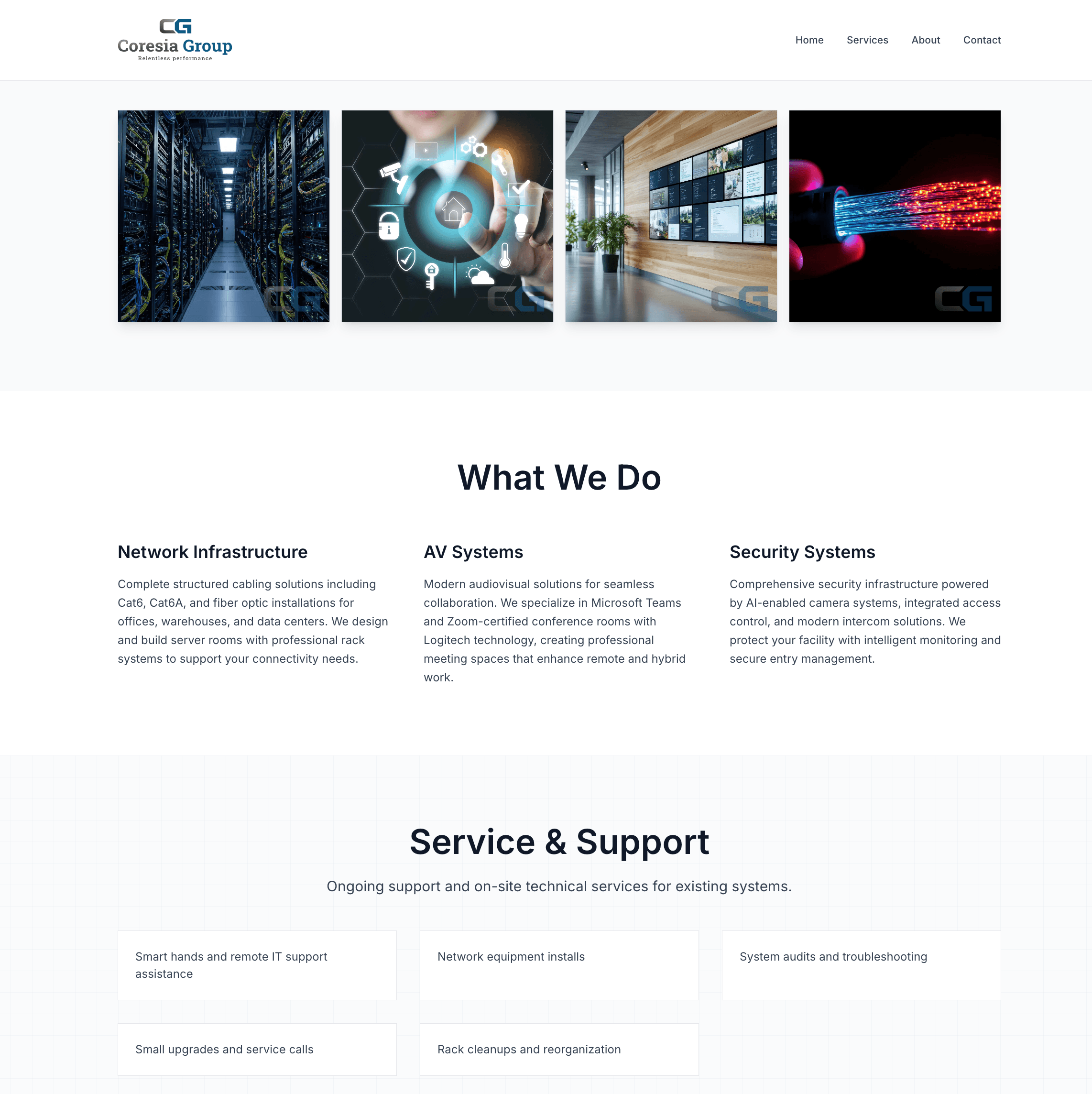
A modern website should do more than look professional. Discover how clear messaging, thoughtful structure, and purposeful user experiences help businesses communicate their value and guide visitors toward meaningful action.
An underperforming website does not always need to be rebuilt. Learn how to identify whether targeted improvements or a more comprehensive redesign is the right approach for your business.